
Methamphetamine, more commonly known as meth, is a very strong stimulant, 
causing the user to appear unusually active and even not sleep for long periods., even for several days. Observers may notice that the user begins to lose a lot of weight and appear thin and undernourished. Because they feel more energetic, the user may appear to be nervous or anxious. People may notice that the user looks sweaty or becomes overheated even though they are not exercising or in a warm environment. Other symptoms include high blood pressure and dilated pupils. The meth user will also engage in risky behavior in order to get more of the drug. The user may also become sexually excited.
Because harsh and caustic chemicals are used in ‘cooking’ meth, its use is very damaging to the user. Many users will develop dental problems because the drug causes dry mouth, even to the point of losing some or all of their teeth. The user may suffer from irregular heartbeat; mood disturbances; violent or aggressive behavior; paranoia and confusion. The victim of meth addiction may also experience a rapid deterioration of both appearance and behavior. Extended or heavy use of meth often results in hallucinations and delusions. The user may become convinced that there are bugs crawling on their skin and will therefore develop sores caused by picking at the skin to get rid of the bugs. This is one of the most commonly recognized symptoms of meth use.
Under the influence of meth, the addict will be unable to maintain gainful employment. The meth addict will also create problems for their friends and family members. Because getting the drug become more important than anything else in the addict’s life. The user will fail to provide for their dependents and will not take care of their home, resulting in increasingly unsanitary living conditions. They may even lose their home. Drugs and drug paraphernalia will often be left within reach of children.
As with many drugs of addiction, meth negatively impacts both the user and those around them. The user will be unable to take proper care of themselves or of their relatives. The destructive impact of meth on the user’s body only grow stronger as the use of the drug continues. In addition, the user’s ability to take proper care of their dependents steadily deteriorates. For these reasons among others, meth is commonly thought of as one of the most destructive illicit drugs.
 ut other people, such as family and friends. They may even have tried once or many times to stop their addictive behavior. Naturally, there are people who enjoy the impact of drugs on their lives, but most victims of addiction want something more for themselves. This does not only apply to those who, in the terms of 12 Step programs, have ‘hit bottom’. It can also apply to those who realize that their behavior brings suffering into the lives of people they care about.
 ay try and fail again and again. They may become discouraged. That is why the support of family and friends is so very important. The addict may be ashamed of their behavior or feel like a failure, especially if they have stumbled along the road to recovery. They may feel like they have let down the people who are dearest to them. They may even begin to feel like they’re just a burden and a problem for other people in their life.
 annabinoids. A variety of herbs are sprayed with chemicals that are designed to occupy cannabinoid receptors in the brain. They have only a minimal relation to the THC found in cannabis. Researchers are not clear as to even how these chemicals effect the body. These chemicals are designed for laboratory testing to study the way that cannabinoids effect cellular processes, but they are not tested on the human body. Some can be extremely
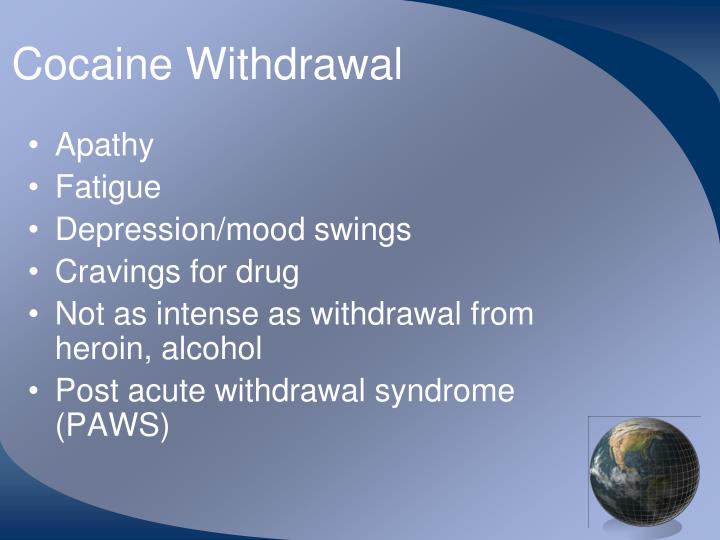 their lives. Victims of cocaine addiction will often sell their property; steal from family, friends or businesses; divert money needed for food, housing or utilities to the purchase of cocaine; or even engage in very risky behaviors such as prostitution in order to get the money needed to purchase cocaine. The reason for this is that cocaine withdrawal can be very difficult. The person withdrawing from cocaine will likely experience depression, sleepiness, irritability, anxiety, chills, exhaustion and even paranoia. Body aches; tremors; the inability to feel pleasure or to concentrate and a strong craving for cocaine are also common symptoms of cocaine withdrawal. These symptoms begin to appear within hours of the cessation of cocaine use, but usually last only a week or two. Over the space of about ten weeks, the person will begin to fell normal again. Despite this short duration, they can be very hard to manage. There is no real danger of death from cocaine withdrawal, but you might feel like you’re dying.